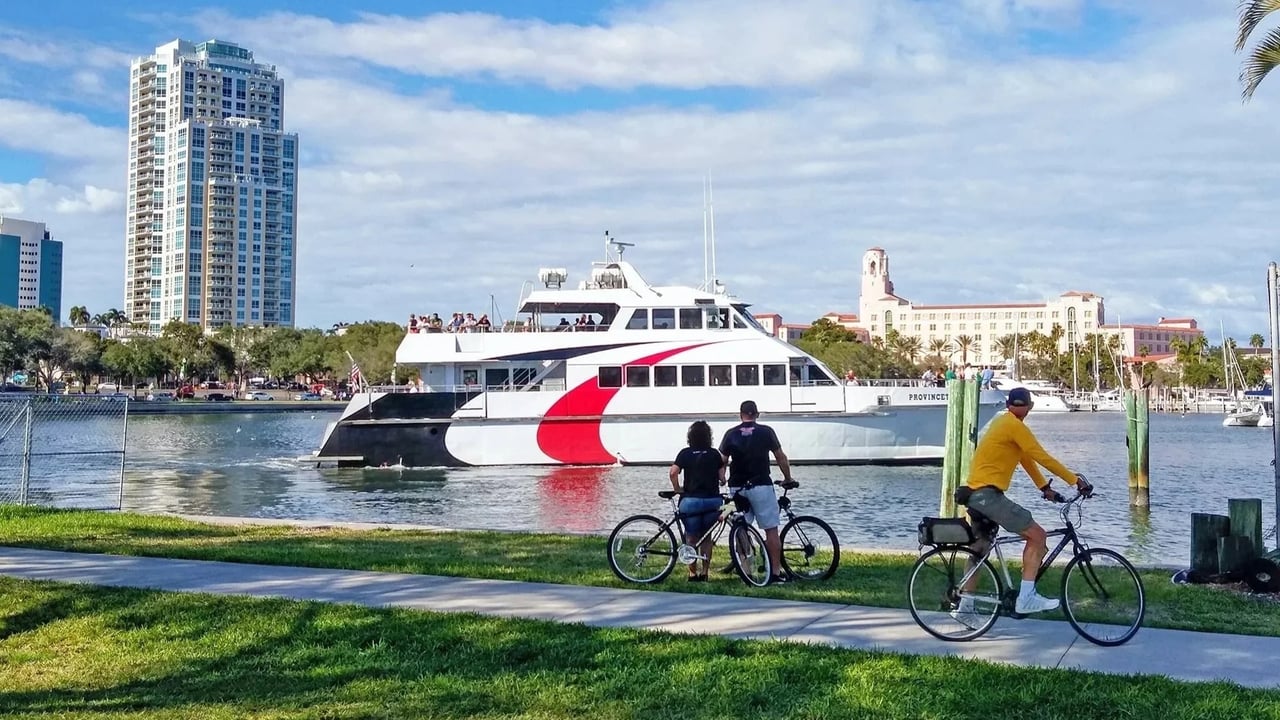
The former Cross Bay Ferry is entering a new chapter with a new name, a new local operator, a new vessel, and a long term vision for water transportation in Tampa Bay.
The Pinellas Suncoast Transit Authority (PSTA) Board of Directors voted unanimously to select Hubbard’s Marina, a Madeira Beach based maritime company, as the new operator of the service, now officially rebranded as the Tampa Bay Ferry. Since 2016, the ferry has connected downtown St. Petersburg and downtown Tampa, serving as a key alternative transit option across the bay.
The vote authorizes PSTA to enter into a five year operating agreement, with an option to extend for an additional five years, signaling a long term commitment to establishing a more reliable and financially sustainable ferry system for the region.
Local Operator Brings Deep Knowledge of Tampa Bay Waterways
The decision follows months of evaluation by transportation leaders from St. Petersburg, Tampa, Pinellas County, and Hillsborough County, all focused on building a ferry service that improves reliability, capacity, and cost efficiency compared to the previous model operated by Boston based HMS Ferries.
Earlier this year, Hillsborough County terminated its contract with HMS Ferries after the company proposed replacing the existing vessel with a slower boat that would have extended the one way crossing from approximately 50 minutes to more than two hours.
On August 5, PSTA issued a Request for Proposal (RFP) to identify a new operator. Hubbard’s Marina was one of four respondents.
Founded in 1928 by Captain Wilson Hubbard, Hubbard’s Marina began as a bait and tackle shop and has grown into one of the most established maritime businesses in Pinellas County. The family owned company relocated to John’s Pass in Madeira Beach in 1976 and now operates deep sea fishing charters, sightseeing cruises, and a marine maintenance and manufacturing facility in Gulfport, Florida.
A Generational Vision for Waterborne Transit
PSTA Board Chair and St. Petersburg City Councilmember Deborah Figgs Sanders said the unanimous vote reflects a shared regional goal of creating a dependable and enjoyable water transit service built for long term success.
“My father, Mark Hubbard, has wanted this for decades, a reliable waterborne transit system for our region,” said Tara Hubbard, Director of Business Development for Hubbard’s Marina, during a media conference. “My great grandfather ferried passengers to the barrier islands before bridges even existed. Being able to bring this service back with intention and community focus is incredibly meaningful to our family.”
Larger Ferry Vessel and Lower Operating Costs
Along with approving the operating contract, the PSTA Board authorized a contingent purchase of a 250 passenger ferry currently located in San Francisco. If the vessel passes sea trials, inspections, and Federal Transit Administration approvals, it could significantly accelerate the relaunch timeline.
The proposed vessel is substantially larger than the previous 149 passenger boat and would allow for increased capacity and improved scheduling flexibility.
According to PSTA CEO Brad Miller, the new agreement with Hubbard’s Marina reduces hourly operating costs by nearly half compared to the prior operator, while also increasing service frequency and overall efficiency.
Local officials emphasized that this is not a restart of the former Cross Bay Ferry model but the foundation of a permanent, long term water transit system for Tampa Bay.
Downtown St. Pete and Tampa Waterfront Infrastructure Plans
Initial service is expected to launch in spring or summer 2026, with departures from the Tampa Convention Center in downtown Tampa and North Straub Park in downtown St. Petersburg.
St. Petersburg also plans to develop a permanent ferry terminal near the St. Petersburg Museum of History on the St. Pete Pier, strengthening the city’s waterfront transportation infrastructure. Preliminary engineering estimates place construction costs between $2.64 million and just over $3 million.
A federal grant of $850,000, secured by Congresswoman Kathy Castor, is pending, while the City of St. Petersburg has already allocated approximately $450,000 for site analysis and early design work.
What the Tampa Bay Ferry Means for Real Estate and Urban Development
For Pinellas County real estate, the Tampa Bay Ferry represents more than a transportation upgrade. Improved cross bay connectivity supports downtown residential growth, enhances waterfront property values, and reinforces Tampa Bay’s evolution toward a more multimodal, walkable, and commuter friendly region.
With a local operator, expanded capacity, and long term infrastructure planning underway, the Tampa Bay Ferry is positioned to play a meaningful role in the region’s future mobility, economic development, and waterfront lifestyle.
As planning progresses and service relaunches, this next generation ferry system reflects a renewed commitment to regional connectivity, sustainability, and smart growth across Tampa Bay.
Aaron Hoffman/ Cømpass Real Estate/ 813.817.7914